
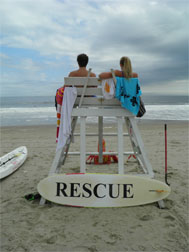

An avalanche of possible retorts flowed through my mind as this statement was expressed to me. I pinched my lips together allowing the words, “Yes, you don’t.” After four years of requests to the local, municipal government to install a pool lift at their beach and pool facility, it will finally be resolved beginning Memorial Day 2018. Yes, I was reassured that a pool lift would be operational this coming summer. For 28 years, elected officials and staff had ignored federal laws with outright lies and stalling tactics hoping “people like me” would go away. Sun, sand, and beach was exclusively for the robust of the borough; the disabled could disturb the scenery. As told to me, pool lifts are too expensive with installation too destructive to the existing pool decks, the pool was not owned or operated by the borough therefore the borough was not required to abide by the law and “we are working on that.” These were just a few of the false excuses for keeping barriers to the pool for exercise and enjoyment. Their intent was clear; we do not want your kind here. Your money, yes. However, do not expect to us provide you with access. So, why would the disable want to be here? For the same reasons everyone else goes to the beach! We want to participate also, not just observe.
A quiet, subversive, systematic apartheid still prevails throughout our country. Our nation’s projection to the world of an ideal of individualism and strength still pervades our psyche to prevent disabled persons from integrating into the population of the healthy. The religious concept of associating affliction with sin still sanctions the attitudes and acts of seclusion for the benefit of society’s well-being. Removal of the imperfect was considered a basic element of Darwin’s theory of natural selection and the survival of the fittest. In Germany, this concept was the foundation of an attempt to produce a pure race of “acceptable” humans by dehumanizing the flawed. Eugenics practiced by the Germans evolved into the Nazi regime. In the United States, society persuaded their governments to enact laws to make Americans appear superior at home and to the world.
In the United States, the “ugly laws” were enforced in cities and states during the late nineteenth century making it illegal for a person with a physical disability as slight as a limp to appear in public. Fines, incarceration or warehousing in public poor houses could be the result of being on a sidewalk. The “ugly” were barred from employment, education, participating in government and social activities. With a single exception, entertainment. Yes, a person with a birth defect or survived polio could not walk with a limp down a street to shop for food or commute to a job but, they could join the circus, be part of an act in a traveling carnival or appear on a stage for the amusement of the acceptable population. Our society allowed the disabled applause or exhibition but not an intellect. The first recorded arrest in 1867 of a former Union Army soldier injured in the Civil War was in San Francisco. In 1974, the last arrest due to the enforcement of “ugly laws” in Chicago was of a man with visible scaring. The last of the “ugly laws” were repealed the following year. Fifteen years later, “ugly laws” were replaced by the Americans with Disabilities Act of 1990; never the less, public perception still lingers throughout our society today.
Particular government officials along their constituents view the disabled as “takers”, powerless objects of distain deserving of ridicule. U.S. Representative Ted Poe of Texas introduced H.R.620 – ADA Education and Reform Act of 2017 on January 24, 2017. The brave, spiritual and patriotic House of Representatives sought to roll back the rights of the disabled (many former military) as they voted to pass this bill. This deceptively named bill will prevent the removal of barriers for the disabled established twenty-seven years ago with Title III of the ADA of 1990. If signed into law, it could take a disabled person years of litigation to gain access to doctors’ offices, restaurants, theaters or anywhere the able-bodied have immediate access. This bill rewards establishments currently ignoring ADA laws for decades to continue with immunity. So, do you think we have evolved as a society? Supporters of a nihilistic bully defend his public humiliation and mocking of a disabled journalist. Acceptance of this type of sanctioned ridicule creates a pervasive atmosphere promoting exclusion and encouraging the creation of this bill.
“…people like you…” Why am I not surprised by this remark? These words are a societal validation of my status as defective and invisible. No, you say. Then, please explain how 63 million of my fellow citizens spent a portion of their day in November 2016 to demonstrate their approval of this nihilistic bully by acknowledging that, “he is my kind of guy.” Welcome to the 1860’s and thank you for making America great. Again!
“Maybe you can’t have a live vaccine? Are dead vaccines okay?” “Does the virus stay in your system?” “Can I catch what you have?” “You can get this again?!” “Are you sure you are pronouncing this correctly, it’s not spelled that way?” “What makes you think this is what you had?” These are just a few questions I was asked.
Yes, I am pronouncing Guillain-Barre correctly. I heard the many doctors and nurses pronounce the name before I knew the spelling. It is pronounced: “gee-YAH-buh-RAY”. In the weeks I was in ICU, many doctors came through the unit but when the Centers for Disease Control verified the diagnosis of West Nile Virus, it confirmed the preceding cause of Guillain-Barre Syndrome. The doctors were relieved to know they had been on the correct track with my treatment.
The warning of never getting another vaccination was repeated often by my doctors although new nurses clutching their checklists tried to administer the flu vaccine while I was in ICU, acute and subacute facilities. In the past, vaccines have caused this syndrome in some people. Live or dead vaccines, it doesn’t make a difference. Guillain-Barre (GBS) is not a virus or bacteria. Vaccines rally the immune system to attack the small amount of virus introduced to your system to create an immunity to a virus. GBS is a disorder which, causes the body’s immune system to switch into overdrive in response to a perceived threat. Rogue antibodies attack in an overreaction to a threat by damaging the myelin sheath covering the nerves. Myelin is like the insulation covering on an electrical wire. When this insulation is damaged, shorts are created cutting off the flow of messages from the brain to the muscles. Muscles go slack awaiting messages, resulting in weakness and paralysis from these short circuits. The longest message routes through the nerves are to the toes and feet. The first feelings can be felt with tingling and loss of control as the damage travels upwards through the core toward the diaphragm. My doctors asked me what this sensation felt like, this was my description: It felt as if my skin was encased in plastic tubing with water running up and down my body through the streams of tubes. The sensation of plastic covering my skin remained and as I began to get movement, I described it as if the plastic was being peeled away. When paralysis proceeds up to the diaphragm it is difficult to breathe to the point of requiring intubation. If the nerve damage proceeds to the heart and lungs which are also muscles then, that is the end.
What causes GBS? No one knows what causes it or why it attacks some people and not others. Anyone can be affected, young and old; children and adults in any region of the world. The most recent GBS outbreak was due to the Zika infections in Brazil preceding and during the 2016 Summer Olympics. News stories concentrated on the birth defects resulting from Zika but, the Brazilian medical community were inundated by cases of GBS following Zika infections. Their hospitals were overwhelmed with GBS patients. With the prospect the arrival of a world of athletes and spectators, doctors’ warnings did not make the news feed. It is theorized, the building of stadiums in the areas of untouched rainforest disturbed the balance of mosquito interaction with the population.
Although the exact cause of Guillain-Barre Syndrome is unknown, often it is preceded by an infectious illness such as a respiratory infection or the stomach flu. So, no you can’t catch GBS from someone with it but, under certain circumstances, you may be susceptible to developing this syndrome. Because my immune system has proven it overreacts to stimulus. I must be wary of anything which could launch another attack against me. My doctors had a long list of things to avoid with their main emphasis on no vaccines, no bug bites, no unnecessary surgical procedures, no sushi or raw fish, and no shellfish. The doctors’ list concluded with this warning, “If you get this again, we will not be able to save you next time.” This bulwark of the sincerity of this doctor’s statement determines my choices as I navigate in my new reality.

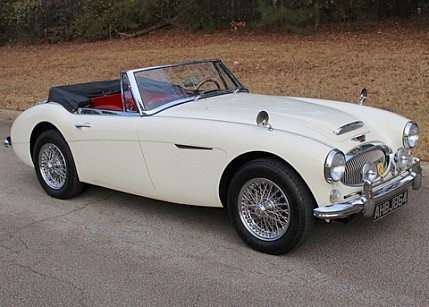 Racing my white with red leather interior 1967 Austin Healey 3000 Mark III down isolated farm and off-season, deserted, beach roads was glorious. I loved speeding (Is there a statute of limitation on speeding tickets because 120mph to 150mph was a perfect cruising speed?) with the top down, bundled up with the heat of the double carburetor feeding six cylinders of power warming my feet. Just skimming above the road, I could almost touch it. This is the only car I truly loved. Then, that golden moment when the Jaguar pulled up beside me at a red light on a well-traveled, local highway. In true classic drama, first I saw the hood ornament hesitate in my peripheral view before the driver of a British racing green Jaguar pulled up next to me. He made the obligatory scan of my Healy, turned up the corner of his lips in an “I dare you” sort of fashion and nodded in approval while he revved his engine. I gave him an almost unperceivable nod and whispered to my dashboard, “Let’s skin this cat.” No revving noise or bluster from us, as from our competition beside us, just quiet anticipation of a green light. Red went to green. Six cylinders working off twin carburetors on a small frame with a hundred pound driver was no match off the line. A flip of a toggle switch into overdrive ended the competition. The Jaguar was still in my rearview mirror as I approached the traffic ahead. When he came along beside me again, he acknowledged the defeat with a smile and a wave. Never underestimate the power contained in a small package.
Feeling the adrenaline rush through your body as set your vehicle up perfectly between the staging lights. Once your opponent and you are “staged”, the Christmas tree lights blink down to green and you are off! Leave too soon and the red light comes on; race over! You are disqualified. As in any competition, it is about power with control. On the local drag race track, I won my division. But, it wasn’t in a fast sports cars, it was with a long body van. Anticlimactic, huh? It was fun though!
Riding on the back of one our Harleys (I searched for a model low and light enough for me to handle. I voiced my feminist outrage to several salesmen. By the time Harley Davidson began making cycles for 5’2” women, I had kids, bills and responsibilities. A motorcycle was no longer within my grasp. Yeah, they sold tight shirts and earrings but not a thought about females as riders.), riding a Vespa through the hills of Greece, rode my moped from barn to beach, a Jeep without doors or windshields, and bicycling everywhere, I loved my wheels! The faster, the better.
Now, I depend on wheels to get into the bathroom. Different wheels take me into the shower. Another set of wheels are for leaving the house. Another set of wheels for my work desk. Steps are the barriers which keep me out! Ramps and lifts allow me to access the rest of the world I used to take for granted. It is amazing the amount of establishments from doctors to restaurants without handicap access. Worse is, the claim to have access where upon arrival to discover access is a delivery entrance which I must be carried over a portion through a warehouse, kitchen, etc. People are putout having to move furniture or rearrange a display while patrons stare to determine the source of the commotion.
The type wheelchair elicits different reactions. Yes, I would never have imagined how strangers feel compelled to voice their assumptions and opinions about me. My memory does not recall this type of outward criticism prior to my illness. With six and half years in a wheelchair experience, I believe it has to do with power and weakness. Is this a primal response? Or, are there just more brutish people with egoistic attitudes our society has cultivated into a “us and them” mindset? When I was too weak to sit up on my own, I used a motorized wheelchair. When out in public (mostly stores), people would stare me down, make huffing noises because I was in their way (I did take up more personal space in a wheelchair than if I was standing.), cut me off and tell me how I should be walking as they briskly fled away from me. This wasn’t a singular occurrence. This happened nearly every time I went out. Other than work, going to a box store was one of the few weekly events out for me and this was what I encountered there. I stopped going for a while until I rationalized I should pity those terrible people because it was on them and not me.
After several years, I gained enough strength to get an ultralight manual wheelchair (the sports car of wheelchairs). It was as if a switch was flipped! Immediately, the side eyes were gone, frowns changed into sympathetic grins accompanied with words of encouragement or silence. . The only variable to change was the type of wheelchair. The manual wheelchair gave the impression that, I was handicapped not, fat and lazy!
Many people still ignore me. I understand they are at loss of what to say with their best response is to avoid eye contact. It is interesting to watch people give me an exceedingly wide berth as if I may careen out of control at any moment. At work, there is a person who hugs the wall of eight foot wide hallway each time I pass her. The wheelchair also elicits the impression of some that I am mentally diminished, hard of hearing or speaking in condescending tones as if I am a small child.
Remember being among adults as a four or five year old? Weaving through and seeing only legs, looking up to see the faces of the owners of those legs? Sit in a wheelchair for a day and relive the experience. I stay away from large crowds. Concerts where people are standing offers me a view of everyone’s butts. Wheelchairs offer limited views of your surroundings; sometimes I have to remind myself to look up.
My friends took up a collection to fund the deductible the insurance company would pay to allow me to get a new wheelchair. The change to the ultralight wheelchair was an emotional and physical transformation. It took so much more core strength to just, move. Maneuvering over bumps and thresholds, mastering skills to transfer into chairs, restaurant booths and cars! Being free of the huge, double battery six wheeler scared me but was also freeing. The large armrests were gone; I had to keep myself balanced. Powering through obstacles changed to learning how to wheelie over or around them. When the machine was stopped, it was stationary; scissor brakes are double checked to remain motionless. Tire pressure and avoiding running over sharp objects replaced maintenance free solid tires. It is all worth it. I take up a smaller footprint, I can pivot and did I mention? I can ride in the front seat of a car.
Because of the size and weight of a motorized wheelchair, it does not travel well. While I was in the sub acute rehab center, my husband purchased a used van with a wheelchair lift. At the time, I hated the idea because in my mind, I would be up and walking in a year maybe two at worse. I am glad he didn’t listen to me. I rode in the back of the van, holding on to seat belts on every turn for years. On one occasion, my son and his girlfriend were driving the van with me in the back. My son was driving at his usual pace but when taking corners; I had to hold on so tight to prevent my head from hitting the window next to me. His girlfriend quickly became aware of my stress and asked my son to slow down. Although he slowed a bit, I was still swaying in the back. After the girlfriend’s several requests to slow down, she changed tactics. She told him, because my center of gravity in the wheelchair was higher than theirs in the car seats, the force centrifugal force in taking corners was difficult for me to overcome. He got it immediately and slowed down. Did I mention? They are both engineers. Sitting so high in the van felt like I was in a fishbowl. Drivers and passengers in other cars would stare in to see why the person in the back is not sitting in a seat at the normal level. Another problem with the wheelchair lift on the van was the amount of space needed to lower the ramp, load and raise was difficult to find. We had a car run over the end of my lift just as I was about to approach it. The driver saw all that space between the sidewalk and the lift, thought he could fit between the two, never imagining a large motorized wheelchair would be loaded onto it. The driver never stopped; he achieved his goal of getting past another car. Luckily, just the bottom of the lift’s ramp got bent a little, the self absorbed driver didn’t take out the mechanism and he didn’t hit me.
An ultralight wheelchair meant I could move to the front seat of the car! Well, here is something I never thought of: objects come at you very fast in the front seat. For years, I was either lying still, going as fast as my motorized wheelchair would go or sitting high up in the back of a van with a small perspective of the road ahead. The first time in the front seat was terrifying. I gripped the armrests in fear of each car hitting us. The cars next to us were too close; the cars coming towards us seemed to be coming at us. This was just driving around town at speeds no more than forty miles per hour. It took a long time to acclimate to this new perspective. Traveling with an ultralight was quicker and easier. After transferring into the car with a slide board, even my friends could lift the wheelchair into the back of the car and we were on our way!
In 2015, we decided to visit my son and his family in the upper peninsula of Michigan for Thanksgiving. We planned drive for two days with one motel stop. I was fine until we got into traffic surrounded by tractor trailers. From my vantage point in our compact car, all I saw were tires. Doubled up tires, on multiple axles moving buildings on the road next to me. On the edges of the road were remnants of failed tires, tire marks running off the roads, bits of glass and plastic evidence of previous disasters. Claustrophobic, I imagined the low pressure of the tires nearest me with their loads leaning over our small car. I startled easily trying not to gasp at each perceived threat so as not to alarm my husband while driving. By the time we reached Pennsylvania with double and triple trailers heaving up the hills and speeding down the other side, I rode with my eyes closed and my fists clenched. Ohio was just as bad but at least it was flat. The dreaded drive back was remedied by my son who downloaded mediation music onto my phone and purchased headphones for my trip back. Here’s the good news, we’ve drove back to Michigan again and I am cured!
Why don’t I get a handicapped driver’s license and drive myself? This is a dilemma with DMV. The DMV has requirements to obtain a handicap license but no procedures to reverse it. The requirements for a handicap license are expensive. I was quoted a price for the required driver training through a private party at a cost in excess of $2000.00 on their schedule and location. A written and road test is required. The hand controls at the cheapest which consist of two sticks and Velcro cost about $1500.00, with more technical controls reaching up to $5000.00. The insurance company requires I pay equal car insurance although I am not driving because I still possess a legit driver’s license. My right leg is almost up to the task and I have a hope to drive again someday. If acquiring a handicap license is this expensive and difficult, I can only imagine it would be almost impossible to regain my previous driving rights.


 recover4shore